
Why knowing when not to place a drain may matter more than how to manage one.
The Bottom Line:
Routine prophylactic abdominal drainage after pancreatoduodenectomy (PD) is no longer universally necessary and may even increase certain risks in low-risk patients. A selective, risk-based approach—reserving drains for high-risk scenarios and removing them early when placed—yields equal or better outcomes and fewer complications.
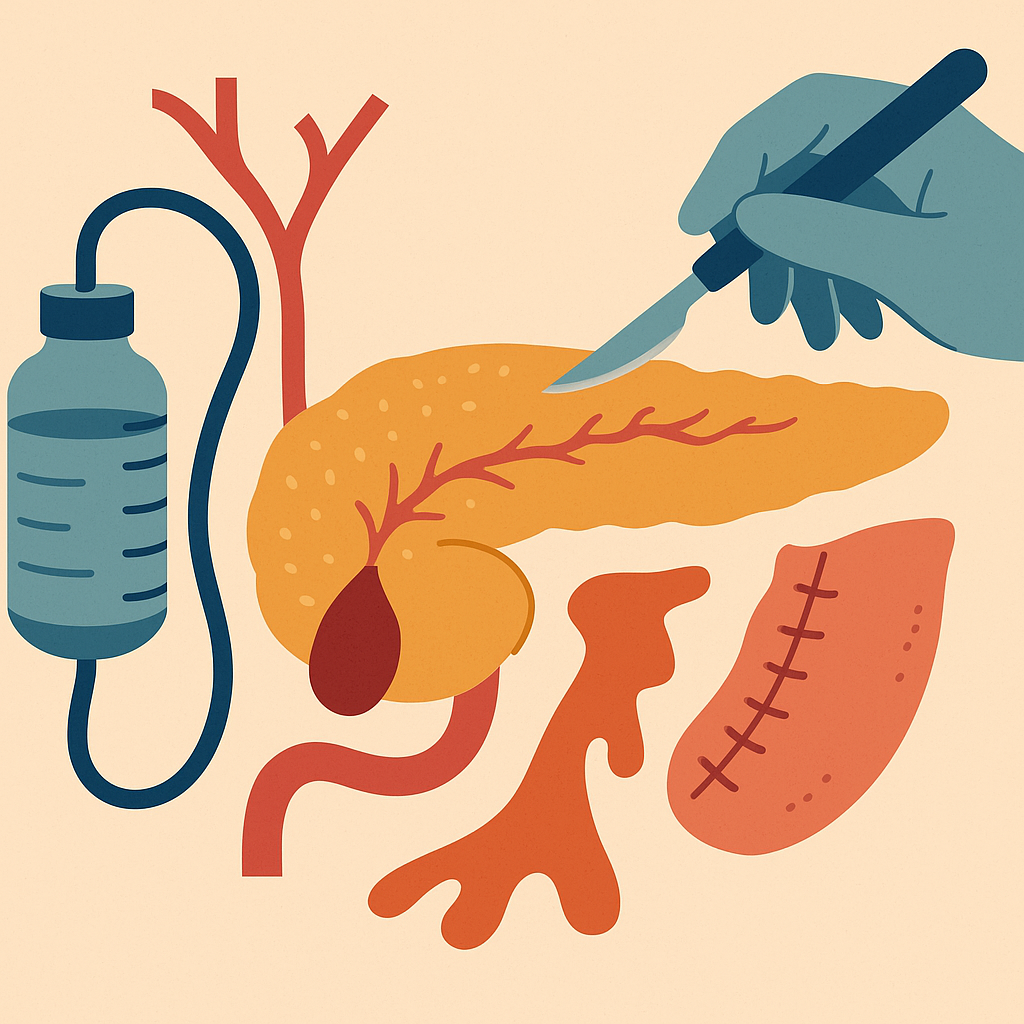
For decades, the placement of intra-abdominal drains after PD was considered a kind of insurance policy. Something you left behind when the work was done — a whisper of presence, a plastic promise that you hadn’t just stitched and hoped. You drained because you were careful. Because you were thorough. Because textbooks said so. Because this was pancreatic surgery, and no one wanted to be the cowboy who left the belly dry and got burned. Because if a leak happened and the drain wasn’t there, the blame would be.
But over the past decade, multiple randomized trials and meta-analyses have challenged that assumption, showing:
- No reduction in overall morbidity or mortality with routine drains, and in some unselected patients, higher rates of pancreatic fistula and surgical site infections (Witzigmann et al., 2016; Nickel et al., 2022; Magnin et al., 2024).
- Selective omission of drains is safe in low-risk patients, especially in high-volume centers with experienced teams (Liu et al., 2021; Lyu et al., 2020).
- Yet, for patients with established high-risk features—soft gland texture, small duct diameter, or high intraoperative blood loss—drain omission may increase mortality, making selective drainage beneficial in these cases (Van Buren et al., 2014; Hou et al., 2025; Kunstman et al., 2017).
The Evidence at a Glance
- Routine Drainage: No significant benefit; may increase clinically relevant postoperative pancreatic fistula (POPF) and surgical site infections (SSI) in low-risk patients. (Witzigmann et al., 2016; Nickel et al., 2022; Magnin et al., 2024)
- Selective Drainage: Considered safe and recommended for high-risk patients. (Van Buren et al., 2014; Liu et al., 2021; Kunstman et al., 2017)
- Early Drain Removal: If drain amylase is low, removing by postoperative day 3 is associated with lower POPF and SSI rates, and shorter length of stay. (Beane et al., 2019; Linnemann et al., 2019; Pollini et al., 2023)
- Active vs. Passive Drains: No major difference in overall complications, POPF, or length of stay; choice can be guided by surgeon preference and specific procedure, with active suction potentially lowering fistula risk after distal pancreatectomy (Zhou et al., 2023; Marchegiani et al., 2018).
Who Benefits from a No-Drain Strategy?
Ideal candidates for omitting routine drains tend to share these features:
- Low fistula risk: firm gland texture, ≥ 3 mm duct
- Stable intraoperative course: minimal blood loss, uncomplicated reconstruction
- High-volume center: experienced pancreatic teams, established fast-track pathways
- Reliable postoperative monitoring: access to serial labs, imaging, and clinical follow-up
By contrast, patients with soft pancreas, small duct, high BMI, or significant blood loss remain better served by selective drain placement to guard against delayed recognition of leaks (Liu et al., 2021; Hou et al., 2025).
Optimizing Drain Management
When drains are used, timing is everything: early removal (POD 3–5) in low-risk patients with low drain amylase leads to fewer infections and shorter stays (Beane et al., 2019; Linnemann et al., 2019).
This approach turns drains from a blanket precaution into a precision tool—used only when benefit outweighs risk, and removed as soon as safety allows.
Where Do We Go from Here?
The era of “drain by default” is ending. Evidence supports a personalized drainage strategy:
- Not every patient needs a drain, and routine omission can lower fistula and infection rates in low-risk cases.
- Selective drainage remains crucial for those at high risk of POPF, ensuring timely intervention where it matters most.
- Early removal protocols further minimize complications when drains are placed.
This isn’t just a technical shift—it’s a cultural one. Surgeons must move from automatic drain placement to nuanced decision-making, aligning intraoperative judgment with each patient’s risk profile and postoperative support.
By embracing a selective, evidence-based approach, we enrich our toolkit—ensuring that every decision, drain or no drain, is tailored to optimize outcomes and patient recovery.